

The relevant provisions in the Turkish Code of Obligations and the Turkish Civil Code will be amended to prevent the division of land; i.e., agricultural land will remain undivided to be the sole property of one inheritor. Certain thresholds for land division will be set to prevent the emergence of small areas of farmland that are not economically viable to cultivate.
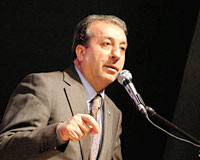
Agriculture and Rural Affairs Minister Mehdi Eker said they had referred the bill on the amendments to be made to the Turkish Civil Code to the Office of the Prime Minister. The draft will further be discussed at Parliament after a review at the office.
For land mergers, lands will be sold to third parties if deemed necessary to make the land viable for farming. Agricultural enterprises and agricultural land will be given to one inheritor. Property transfer transactions will be completed within six months to settle the instructions of any will involved. In the event of objections from any inheritors, a civil judge will make the final decision as to who will run the enterprise or the land, considering the personal abilities and status of the inheritors. Until such a decision, the land will be run by a third party.
In cases where the inheritors are all equal, the land will be transferred to the inheritor making the best financial offer. The inheritor who gets the land will be granted a low-interest loan by the state if he or she is unable to buy out the shares of other inheritors. No land registration will be made unless there is full payment. In the event of divided ownership, if any portion remains below the limits for indivisible land size, these portions may not be sold, transferred or mortgaged to any third party.
Unused state land will be distributed to farmers free of charge by the Ministry of Agriculture and Rural Affairs. The ministry will transfer it to farmers for organic agricultural use.
The Office for Agricultural Land Procurement will ensure mergers of land on a voluntary basis and the emergence of larger enterprises. The ministry, which follows guidelines practiced in France, will create large agricultural areas. Agricultural subsidies will be reallocated based on production, efficiency and quality. The places where French-style agribusinesses will be created include Adana's Çukurova region, the Harran Plateau, Samsun's Çarşamba Plateau, Thrace, the Gediz-Menderes region, and the Antalya and Konya Plateaus.
A total sum of 137,000 hectares was merged up to 2002, and this figure has risen to 232,000 hectares over the last five years. Turkey's revenues from agriculture have increased by 80 percent because of the process of merging land.
Agricultural land collectivization will be conducted in a vast area of 112,000 hectares by the end of 2008. To accelerate the process, the process of inheriting agricultural land will be strictly controlled and offices will be established to ensure the merger of agricultural land. An area of 14 million hectares will be included in the collectivization. At the end, the size of French-style agribusinesses will increase by at least twofold.
Minister Eker noted that they will set up a mechanism to deal with complaints to overcome any possible problems with agricultural activities. Eker further said that agricultural pesticides will be sold in line with EU legislation and that sellers will have to acquire a license and certificate of eligibility. Farmers will buy the proper fertilizer after having the samples they collect from their land examined.
The minister also noted that a new " gene bank" will be set up in Ankara in 2009 to carry out research on the genes of some seeds and plants. Eker said this will be the third largest gene bank in the world.


