

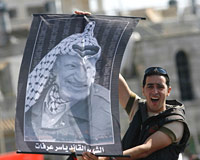
His wife refused an autopsy and Palestinian leaders have never given a definitive cause of death. French doctors who treated Arafat concluded he died of a "massive brain hemorrhage" after suffering intestinal inflammation, jaundice and a blood condition. Arafat's successor, President Mahmoud Abbas, laid a wreath at Arafat's burial site in the presidential compound, where a glass-and-stone mausoleum was dedicated last year. Eventually, an Arafat museum is to be built in the complex.
Arafat's longtime advisers, who now serve under Abbas, said the deepening split between the West Bank and Gaza would have hit Arafat hard. In 2007, Abbas lost control over Gaza, during a violent takeover by the militant Hamas. "I would say today, had Yasser Arafat lived to see the coup and the divisions, he would have died (of heartbreak) anyhow," said Palestinian negotiator Saeb Erekat, referring to the Hamas takeover.
No major memorial rallies were planned in Gaza. Fatah and other groups asked Hamas authorities for rally permits, but said they did not get a response.


