

The two countries have had no diplomatic ties since 1993, when Ankara closed Turkey's land border in a show of solidarity with ally Azerbaijan, which was fighting Armenian-backed separatists over the Nagorno-Karabakh region.
Relations have been haunted by the killing of Anatolian Armenians by Ottoman Turks during World War I, which ex-Soviet Armenia says amounted to genocide. Ankara rejects the genocide claims.
Turkey showed a willingness to step up diplomatic efforts to normalize relations between Ankara, Baku and Yerevan last year when President Abdullah Gül visited the Armenian capital for a soccer match between Turkey and Armenia.
The countries have also participated in three-way talks with Azerbaijan on normalizing relations.
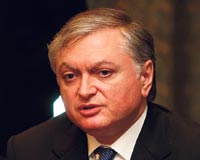
" We are very close to normalizing Armenian-Turkish relations," Armenian Foreign Minister Edward Nalbandian told a news conference on Wednesday. " We can take the next step and resolve the issue if Turkey, like Armenia, approaches it without preconditions and opens the border.
" After the border opens, we are ready to form a commission in which we can discuss issues relevant to both countries."
He didn't elaborate; nevertheless, Nalbandian was probably referring to three-year-old offer by Ankara. In 2005, Prime Minister Recep Tayyip Erdoğan sent a letter to then-Armenian President Robert Kocharian, inviting him to establish a joint commission of historians and experts from Turkey and Armenia to study the events of 1915 using documents from the archives of Turkey, Armenia and any other country believed to have played a part in the incident. No positive response has yet been received to this offer.
Last Friday, Turkish Foreign Minister Ali Babacan said in a television interview that the normalization of relations between Armenia and Turkey and Armenia and Azerbaijan was no longer a dream.
" I can easily say we have never come this close to a plan regarding the final normalization of relations with Armenia," he said then.
Turkey wants Yerevan to be part of a proposed Caucasus Stability and Cooperation Platform, a regional organization to urge a peaceful resolution of conflicts that would include Turkey, Russia, Georgia and Azerbaijan.
In a recent interview with Today's Zaman, Gül dismissed claims that Azerbaijan was unhappy about the Turkish-Armenian reconciliation initiative and said that Baku was also satisfied because steps in the direction of resolving disputes in the Caucasus, including the Nagorno-Karabakh conflict between Azerbaijan and Armenia, were in everyone's interest.
Turkish and Armenian diplomats have been holding secret talks on a potential normalization of relations since Gül's visit to Yerevan in September. Gül declined to comment on the diplomatic contacts, saying only that efforts were under way. " Sometimes the efforts are made publicly, but sometimes they are carried out in secrecy," he said.


