

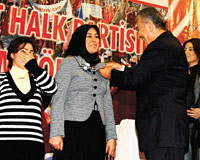
In remarks that surprised many, staunchly secular Baykal, the man responsible for asking that an amendment which would have lifted a ban on Muslim headscarves at universities be annulled by the Constitutional Court, said on Sunday: " We are setting off hand-in-hand with people who had not come together before. We are setting off with all men and women -- all who cover their heads and all who do not."
Baykal's remarks yesterday came in response to criticism that he was aiming to woo conservative voters ahead of the local elections, slated for March 2009.
Saying that these covered women do not seek to impose their attire on anyone, Baykal said: " These people practice what they believe. They respect and love the nation and honesty; after thinking about all this, they joined us."
He also noted that as a party, the CHP did not exclude any form of attire and just as covered woman can vote for the ruling Justice and Development Party (AK Party), they can vote for the CHP as well.
Baykal said any citizen who complies with the law can join the CHP regardless of how he or she dresses.
In early February, the governing AK Party, with support from the opposition Nationalist Movement Party (MHP), passed a constitutional amendment package to lift the decades-old ban on wearing the Islamic headscarf on university campuses. However, upon an appeal by the CHP and its ally, the Democratic Left Party (DSP), the Constitutional Court ruled in early June that Parliament had violated the constitutionally enshrined principle of secularism when it passed amendments to remove the scarf ban and annulled the amendment.


