

There have been many incidents in Turkey in which uniformed men or retired officers have sought the protection of the TSK despite the gravity of the crimes that they have been accused of committing.
For example, last year, two noncommissioned officers were released when their case was transferred from a civilian court to a military one. A civilian court in the city of Van sought prison sentences of 39 years for two NCOs over their alleged role in the bombing of a bookstore in Şemdinli in Hakkari province in March 2006. But when their case was transferred to a military court, they were released. This has raised the issue that the two officers were hidden behind the protective shield of the military.
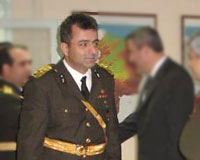
Dönmez's surrender to the military authorities after being sought by Turkish police over his role in the Ergenekon terror organization has once again raised suspicions that a military officer will find protection in the military judicial system.
Dönmez disappeared after the latest round of arrests on Jan. 7 that were part of the investigation into Ergenekon, despite his assurances to a member of the military who was with the police during a raid on his house that he would surrender.
In the meantime, police seized a large number of bombs and ammunition during the searches that they made in Dönmez's house, in the Sapanca district of Balıkesir. A sketch found in his house helped police to unearth explosives and ammunition on Jan. 12 at a historic site in the Sincan suburb of Ankara.
Dönmez surrendered to military authorities and was put in a military jail in Ankara on charges of stealing military goods and selling them under Article 131 of the Military Penal Code. A Turkish military analyst has noted that if his trial by military court is limited to this relatively minor offense, then it will be obvious that he is being protected by the military.
In a 2005 paper published in a security journal Dr. Ümit Kardaş, a retired military judge, said newer regulations have given too much power to military courts. Military courts hear cases of crimes against the military and also civil law offenses which have been committed by military personnel; however, this is not how the military courts are supposed to be used. They have become the sole place of trial for soldiers, insulating them from " natural" courts, he added in the same article.
The article reads: " It is important to bear in mind that, being Turkish citizens, personnel should also be subject to common law. The military court is a completely separate institution in terms of its structure, procedures and jurisdiction. This is particularly evident when the special procedures of its jurisdiction are considered, such as the appointment of judges, punishments imposed and the dependency of military judges on the commander with whom they are in a hierarchic relationship. Military personnel are not only isolated from ... 'natural' judges but are also in a different realm of jurisdiction by being under military jurisdiction for common offenses." In the same article, Kardaş also points out the fact that military judges are not independent or immune from politics.
" It is of tremendous importance that the concept of military crime be clearly defined, with well-defined limits that leave no room for interpretation. Military crimes should be those crimes committed by military personnel and related to military duty and service alone. These must be defined as those acts that directly affect military discipline and infringe upon military service and duty," Kardaş stated.
There are at least four more active officers who have been arrested over their alleged links with Ergenekon, which is accused of planning to incite an armed uprising to overthrow the government. The TSK's attitude during their trials will also signal the fairness of the military judicial system.


