

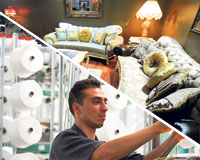
Furniture and textile producers were the first to raise their voices demanding a temporary reduction of value-added tax (KDV) rates to allow manufacturers to sell their excess stock.
Adana Chamber of Carpenters and Furniture Producers Chairman Aydın Hür said the KDV on furniture products must be slashed from the current 18 percent to at most 10 percent to provide recovery for the furniture industry.
Adana is one of the few centers of furniture manufacturing in Turkey, and factories in this city mainly produce products to meet demand from Saudi Arabia, Jordan, Dubai and Lebanon. Finished and semi-finished goods from Adana are sold to the domestic market as well.
However, revenue has steadily dropped in the sector, pushing many companies into trouble in recent months, according to Hür. " Our exports have virtually halted since the beginning of the year. Additionally, the contracting domestic market also adds to our problems," he said. " Every new year, we yearn to at least perform as well as the previous year. Most of our members close their doors every evening without making even a single sale."
Zeki Bengül, a furniture manufacturer in Adana and a board member for the Adana Chamber of Industry (ADASO), also states that a tax reduction is urgently needed to stimulate the furniture business. If the government doesn't act in time, many companies may see closures, he said.
Uludağ Textile Exporters' Union (UTİB) Chairman İbrahim Burkay also said his sector demands incentives similar to those enacted to aid the auto, household appliance and real estate sectors.
He assessed the package as " very positive," especially for the automotive sector, saying he had no doubt that the package would contribute to reinvigorating the market.
Burkay said he didn't expect the government to announce a new package at least until after the local elections later this month. However, he said another comprehensive stimulus measure must be designed that would include all the sectors in trouble, particularly textile and textile-related industries, which he claimed were facing especially hard times.


