

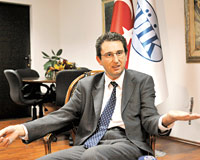
Shortly before his death, Halaç had been looking at the possibilities of extracting gold and operating gold mines in Africa. He had the idea that the raw gold exported directly from these countries could be refined at his İstanbul Gold Refinery (İAR). Halaç contracted malaria on a visit to Ghana, where he was seeking new business opportunities. An industrial engineering graduate of Anadolu University, Halaç was the inventor of a number of machines used in his own refinery. He also introduced small gold bars for individual savings purposes.
Halaç was born in 1970 in the western Anatolian city of Afyon. In 1996, he established Halaç Jewelry with the intention of later converting it into a refinery. This small company became the leader in the Turkish gold industry in just four years with Halaç's skillful management. İAR was founded in 1996 by the state, but it was not able to begin operations until Halaç bought 99 percent of its shares in 2002.
Halaç's family has sued Acıbadem Hospital and his doctor for failing to diagnose the disease quickly enough. The lawsuit, filed early this month at the Bakırköy Court of Peace, is seeking YTL 10 million for material damages and YTL 1.8 million for emotional damage caused by Halaç's death.
The family said the doctors should have considered the possibility of malaria because Halaç said he had just returned from Africa. It took Turkish doctors four days to come up with a diagnosis despite dozens of medical tests. If the compensation is awarded by the court, the proceeds will go to a scholarship fund to be established in Halaç's name, the family said.


