

Retired Col. Abdülkerim Kırca, who shot himself at his Ankara apartment on Monday, had been freed from trial under the protection of the General Staff despite a large number of allegations against him from families of victims of hundreds of unsolved murders and disappearances in the predominantly Kurdish South-east, where Kırca served in the '90s.
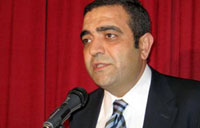
Sezgin Tanrıkulu, former head of the Diyarbakır Bar Association, said a large number of cases against military officers are overturned by military judges on the grounds that an organization referred to as JİTEM -- a secret and illegal unit formed under the gendarmerie force, which was possibly intended to facilitate the military's fight against ethnic terrorism in the Southeast but which later became an instrument for terrorizing locals and a major player in the region's illegal commercial activities, such as drugs and arms trades -- does not exist as a military institution.
Although a vast body of compelling evidence, including confessions of former JİTEM members and well-documented information on some of its crimes, proving the existence of JİTEM has gone public, the state officially denies its existence. Tanrıkulu said this is the key reason military judges cite in overruling criminal complaints and investigation requests regarding officers thought to have been involved in unspeakable crimes.
Some files are just left with the General Staff, without being processed at all, Tanrıkulu claimed. He said in the year 2005, when he was head of the Diyarbakır Bar Association, many complaints they filed against Kırca were referred by civil courts to military courts to be relayed to the General Staff, which never provided any information or followed up on the cases. The General Staff also never responded to any of their inquiries, Tanrıkulu told Today's Zaman.
According to Tanrıkulu, PKK member-turned-informant Abdülkadir Aygen had provided information on some unsolved murders, allegedly committed by JİTEM, he had witnessed. In February 2005 the Diyarbakır Bar Association filed a criminal complaint against 31 suspects accused of murdering 28 individuals.
Tanrıkulu said the bar association first approached Aygen's confessions with suspicion, which eased over time due to some unexpected developments. " Aygen had told us how a man named Murat Aslan was kidnapped in Diyarbakır, and then murdered in Şırnak and buried at a spot there. With the help of area villagers and the Human Rights Association [İHD], we found the location he described and dug there. We found some human bones there. We informed the prosecution. A DNA test proved that the body indeed belonged to Aslan. After this, we thought it highly possible that the rest of Aygen's testimony could also be true, and then filed criminal complaints after that," Tanrıkulu explained.
The Diyarbakır Public Prosecutor's Office ruled the case outside its jurisdiction in a decision dated Feb. 28, 2005, on the grounds that Kırca was a member of the armed forces and referred the file to the 7th Army Corps Prosecutor's Office. However, according to Tanrıkulu, the military prosecution did not take any action regarding the file and simply sent it on to the General Staff.
On March 29, 2005 a case was launched against eight suspects, including Kırca, at the civilian Diyarbakır 3rd High Criminal Court. The other suspects included Mahmut Yıldırım -- better known to the public as Yeşil, a codename which means green -- Muhsin Gül, Fethi Çetin, Kemal Emlük, Saniye Emlük and Yüksel Uğur. The victims of the murders, as noted in Aygen's testimony, were Havli Arman, Lokman Zungurlu, Zana Zungurlu, Servet Aslan, Şahadettin Latfeci, Ahmet Ceylan, Mehmet Sıdık Etyemez and Abdülkadır Çelikbilek.
The case was launched, but the trial has still not begun, Tanrıkulu said.
Another ongoing case, also based on Aygen's testimony, deals with the deaths of Hasan Caner, Hasan Utanç and Tahsin Sevim, killed in 1989 after being kidnapped along a highway connecting Şırnak to İdil. All the suspects in this case are former Kurdistan Workers' Party (PKK) members who later worked for the state, and JİTEM, as informants. The Diyarbakır court again ruled the case out of its jurisdiction, but this was later overruled by the Court of Jurisdictional Disputes. This case is also currently being handled by the Diyarbakır 3rd High Criminal Court.
" The cases referred to the military court are either turned down with the excuse 'There is no such thing as JİTEM,' or if they involve high-ranking officers, they are sent to the General Staff, which does not process any of these cases," Tanrıkulu told Today's Zaman.
Tanrıkulu said the situation calls for questioning the system, adding that although every country has military courts, these courts do not hear cases about activities that have nothing to do with military duty. In Turkey, permission from the General Staff is needed to try members of the military, regardless of the nature of the accusation. " Kidnapping people is not a military activity. But what do we have? The civilian judiciary passes the ball to the military judiciary, which either overturns it or sends it to the General Staff. In this sense, the military judiciary acts like a bottomless pit."
" In a similar case, Gültekin Sütçü was accused of killing Şerif Avşar in Diyarbakır in 1994. Sütçü, allegedly working for JİTEM, was captured in 2006 as a murder suspect and referred to a military court. The military court ruled the case outside its jurisdiction and demanded the suspect's release. When the case was referred to the Court of Jurisdictional Disputes, which launched a trial, Sütçü was tried and sentenced to 30 years. The case is currently in the appeal process," he said.
Tanrıkulu also highlighted that most of the retired colonels and generals, such as Veli Küçük, Arif Doğan and Levent Ersöz, who have been accused of being in key positions inside JİTEM, are currently all jailed as suspects in the Ergenekon trial.
" But the only cases that have made it to court regarding JİTEM acts are those of Sütçü, the kidnapping in Şırnak and the case going on at the Diyarbakır 3rd High Criminal Court, as far as I know. Even the low number of such cases shows us how far we still are from trying JİTEM crimes," Tanrıkulu said.
Tanrıkulu also commented on a General Staff statement made on Tuesday accusing the media of " execution without trial" for publishing Aygen's allegations, saying he was just an informant. " They convicted hundreds of people based on the statements of those informants. If we are not to take informants seriously, then why were they convicted?"
Military judiciary is the problem
Retired military judge Ümit Kardaş refers to the mere presence of the military judiciary as a problem in and of itself. " Since time immemorial, the problem of the Turkish judiciary has been its dual nature. The jurisdictional area of the military judiciary has been extensive since the 1960 Constitution. A military officer is tried by a military court even if he commits a completely civilian crime."
He said in most investigations involving members of the military, the case ends up being sent to the Court of Jurisdictional Disputes. " Another problem is that, often, these cases are sent to the General Staff, which simply covers them up. But who will inspect this institution. Who will investigate if there is a crime?" Kardaş asked. AYŞE KARABAT ANKARA


