

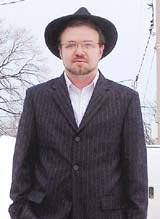
According to the MİT document, Güney, who used the codename İpek, or Silk, for MİT operations, purposefully infiltrated Ergenekon and JİTEM, an illegal intelligence unit in the gendarmerie suspected of hundreds of murders, kidnappings and disappearances. He was then taken out of the country and directed to the US when his identity was exposed in his police interrogation.
Mehmet Eymür, a former MİT Counterterrorism Department Chief, had previously indicated that Güney was an MİT agent in an interview years ago.
According to the document, Güney joined the MİT at a very young age. He was recruited by MİT İstanbul Regional Director Galip Tuğcu. He worked in the Reactionary Activities Department until the 1990s. Later he briefly worked for the MİT's Iran Unit, where he did interviews with people from many Middle Eastern countries posing as a journalist. In 1992, he was transferred to a different department, where he was given the task of infiltrating Ergenekon and other so-called " deep state" structures -- groups nested within the state and military hierarchy that try to manipulate public opinion through murders, assassinations and even seemingly civilian demonstrations according to their own ultra-nationalist agenda. In 1992 Güney met for the first time with retired Gen. Veli Küçük, a former military commander who is currently a suspect in the Ergenekon case. He reported actively to the MİT in 1996, when a car accident publicly exposed a shadowy relationship between a police chief, an ultra-nationalist mafia boss and a member of Parliament, and also in 1997, when a group of military officers staged a non-armed intervention that forced a government out of power. He was captured in 2001 as an Ergenekon suspect, where his identity was uncovered by Police Chief Adil Serdar Saçan, who is also currently in jail as an Ergenekon suspect. The MİT's undersecretary at the time, Şenkal Atasagun, then contacted the CIA, securing Güney a 10-year visa.
The MİT confirmed yesterday that the document was genuine, but denied that Güney was a full-time source of information. " He is an individual who attracted our attention at the time due to his suspicious activities. He was not a permanent agent," MİT said in a written statement released yesterday.


