

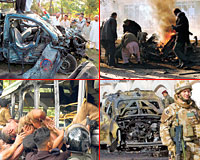
Georgia was the latest country to fall under the plague of cluster bombs as war broke out with Russia over the breakaway province of South Ossetia, but the munitions have long been a scourge of wartorn places from Angola to Afghanistan. Most of the munitions scattered around Kitiashvili's home have been cleared, but she still lives in terror of sporadic explosions that go off at night. "Who knows what could happen?" asks the 22-year-old mother, holding onto her daughter tightly.
Although activists are hailing the cluster bombs convention as a landmark achievement, the refusal of the world's two largest producers of the munitions -- the United States and Russia -- to sign on will limit its effect.


