

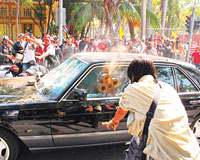
Chanting "Abhisit, army nominee," the red-shirted demonstrators denounced the 44-year-old as a front man for the military, which ousted elected leader Thaksin Shinawatra in 2006 and which has been accused of political meddling ever since.
Abhisit was backed by 235 MPs against 198 for the former government's candidate, but his thin majority is likely to take a hit on Jan. 11 when by-elections are held to replace 29 MPs fired in this month's court ruling.
Relying on small parties and a breakaway faction of the pro-Thaksin Puea Thai Party, he will have little room for maneuver as the global slowdown and the recent blockade of Bangkok's airports by anti-Thaksin protesters hit the tourism- and export-driven economy.
"Very soon, the impact of the global economic crisis will be felt more seriously in Thailand. The new prime minister needs to prepare immediately for that," Sompop Manarungsan of Bangkok's Chulalongkorn University said. Outgoing Finance Minister Suchart Thada-Thamrongvech has forecast economic contraction of 0.5-1.0 percent in the first quarter of 2009 from a year earlier and zero growth in the second, putting it on the brink of recession.
"There are no new bookings. You go to the hotels and they are empty," Luzi Matzig, managing director of travel agency Asian Trails, said of the double blow from the airport shutdowns and economic downturn.
He said his December business in Thailand was down 50 percent on a year ago.
Abhisit declined to talk about policies after the vote, but said last week that reviving growth through increased government spending would be his top priority, although it remains to be seen where he will get the money from.


