

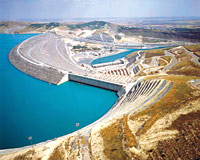
These plans included gradually realized goals regarding water management, the report said. Investments in the areas of water infrastructure and effluence management have increased in Turkey, and the number of people benefiting from such water treatment facilities has increased by nearly 40 percent, the report says.
However, in addition to mentioning the gains Turkey has made, the report also details problems and makes recommendations. Insufficient pollution control has caused the tainting of surface water, causing water quality to reach dangerously low levels in some urban municipalities, the report says. "Pollution intensity levels calculated according to the amounts of sulfur dioxide and nitrogen oxide emitted in relation to overall economic output are among the highest in OECD countries. Approximately 53 percent of total effluent from industry, much of it containing poisonous metals like mercury, lead, chromium and zinc, is still discharged into rivers and coastal waters without any treatment," the report noted.
The OECD also said Turkey can do more in developing renewable energy sources, and called for stronger regulatory standards -- and tougher implementation -- in line with EU legislation.
"Turkey confronts the challenge of ensuring that economic growth is associated with environmental and social progress," the report said. "Strengthened environmental efforts from national government, municipalities and the private sector are required to achieve environmental convergence with other OECD countries."


