

Earlier this month an Ergenekon informant, Tuncay Güney, alleged that a number of people had been summarily executed by the secret gendarmerie intelligence unit known as JİTEM in the 1990s.
He said that the bodies were burned with acid and buried in wells located near facilities owned by the state-owned Turkish Pipeline Corporation (BOTAŞ) in Silopi. The prosecutor's office in the city last week authorized investigators to locate and open these wells. BOTAŞ's management has announced that it would provide any assistance necessary in opening up the wells. However, BOTAŞ has only a few oil wells in Silopi; most of the wells in the region belong to the Turkish Petroleum Corporation (TPAO), and these wells must also be examined.
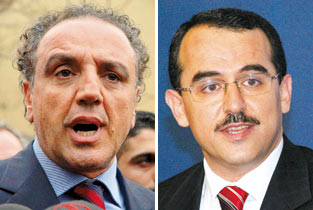
Speaking last week in Parliament, DTP Muş deputy Sırrı Sakık said his party had important documents and information regarding Ergenekon and the activities of some Ergenekon or JİTEM members in the Southeast and called on Parliament to take some initiative on the death wells allegations. Sakık said his party had information about the location of wells with bodies that were discovered when Atilla Uğur, another Ergenekon suspect and a former member of the military, served in the region in the army. Sakık submitted a proposal for setting up an investigative commission on the death wells to the deputy chairmen of all political parties represented in Parliament.
The DTP demands that a parliamentary commission investigate the death wells; the demand is also supported by the Justice and Development Party (AK Party), which holds the largest number of seats in Parliament. However, the AK Party also believes that it would be wiser for the prosecutors assigned to Ergenekon to look into the death wells allegations first before Parliament becomes involved. The AK Party administration has requested that Justice Minister Mehmet Ali Şahin look into the allegations, investigating every single claim.
The Republican People's Party (CHP), the second largest party in Parliament, has expressed opposition to a parliamentary investigation into the wells while the Nationalist Movement Party (MHP) has so far remained neutral on the subject.
Meanwhile, the Human Rights Commission has started its investigation into the Ergenekon death wells. CHP İzmir deputy Ahmet Ersin, a member of the commission, said commission members have so far made contacts in the Silopi region. " The link between these allegations and Ergenekon has been established. If the prosecutors on the Ergenekon case approve, the wells will be opened," Ersin told Today's Zaman.
BOTAŞ and death wells
AK Party parliamentary group Deputy Chairman Bekir Bozdağ told Today's Zaman that his party's opinion was that it was not a good idea for Parliament to intervene in an ongoing investigation. He said prosecutors should first investigate the allegations, noting that the Silopi Chief Prosecutor's Office had already started a probe into the claims.
Meanwhile, the DTP administration formed a delegation to inquire into the death wells. The delegation has begun investigating the BOTAŞ wells in Silopi and another well in Mardin's Kızıltepe district in which two human heads had been found. Parliamentary Human Rights Commission member Akın Birdal said a detailed report had been filed on the well in Mardin and sent to the prime minister.
The Mardin bodies
Fatma Tunç, the wife of Yusuf Tunç, abducted 15 years ago from his home, applied to the Mardin Prosecutor's Office last month, saying she had heard information that her husband's body might be thrown into a well located in the Katarlı village in Kızılepe. Two bodies were exhumed from the well that was opened after Fatma Tunç's application. The bodies were transferred to the İstanbul headquarters of the Council of Forensic Medicine, while 15 others from the region applied to the Human Rights Association (İHD) to find out whether one of the bodies could belong to one of their loved ones who also went missing in the region in the '90s.
Hüseyin Cangir, a lawyer for Tunç and the families of a number of other missing people, stated that the Mardin well bodies should be evaluated and seen within the context of the Ergenekon organization, recalling that retired Col. Hasan Atilla Uğur, who was the Kızıltepe District Gendarmerie Commander at the time of the mysterious disappearances, is currently jailed as an Ergenekon suspect.
The alleged 1995 assassination of Col. Albay Rıdvan Özden, a gendarmerie commander at the Mardin Provincial Gendarmerie Command, has also been associated with Uğur. Retired General Şener Eruygur, also an Ergenekon suspect, also served in the regional gendarmerie command around the same time in mid-'90s, observers note.


